Learning Spanish in Barcelona
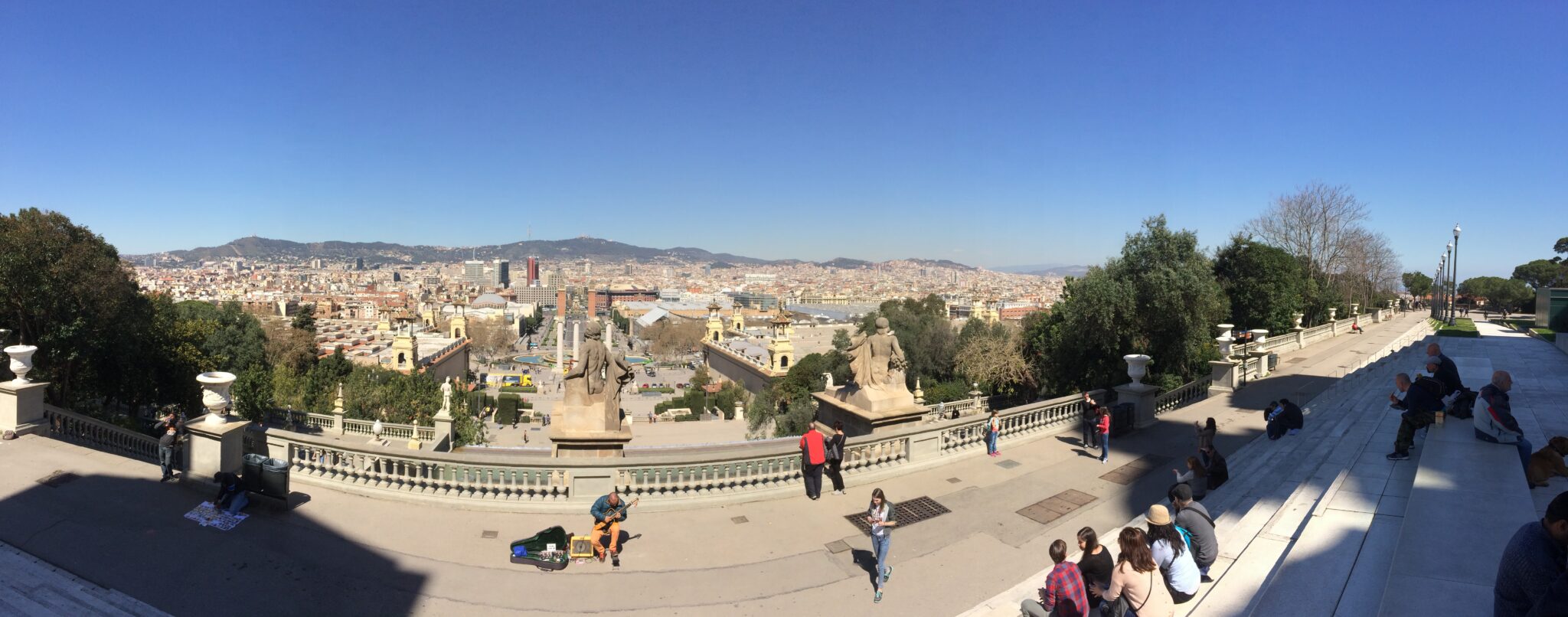
Barcelona is a cosmopolitan city with a rich political history. As a result the city and surrounding areas are Bilingual with Castilian and Catalan.
Why do they speak Catalan in Barcelona?
Barcelona speaks Catalan because it is the capital of Catalonia, a region with a distinct identity and language that evolved from Latin. Catalan became an official language alongside Spanish after Franco’s dictatorship, making it a core part of Catalan culture, history, and political expression.
How many people speak Catalan in Barcelona?
In Barcelona, while a high percentage of people understand Catalan (over 90%), only about 36% use it as their habitual, everyday language, according to 2018-2023 data, with Spanish being the dominant language for daily communication. Roughly 25-30% of the population speaks Catalan at home. (reference: https://www.catalannews.com/society-science/item/catalan-is-the-first-language-of-less-than-one-third-of-the-population)

What to expect
While Catalan is an official language, Castilian Spanish is used daily by nearly everyone. You can easily navigate the city, order food, and work using only Spanish.
Potential Challenges
In some less-touristy social settings with locals, Catalan may be the default language. There are also a number of street signs and menus that display both languages although, when you know what to look for this really isn’t an issue.
What language do they use at Spanish Language School in Barcelona?
Students who are studying Spanish almost always want to learn Castilian. (Certainly UK exam boards are examining Castilian.) Blue Stamp partner language schools always speak and teach Castilian Spanish. Lessons in Barcelona are the same as you would experience in any other part of Spain.
Benefits
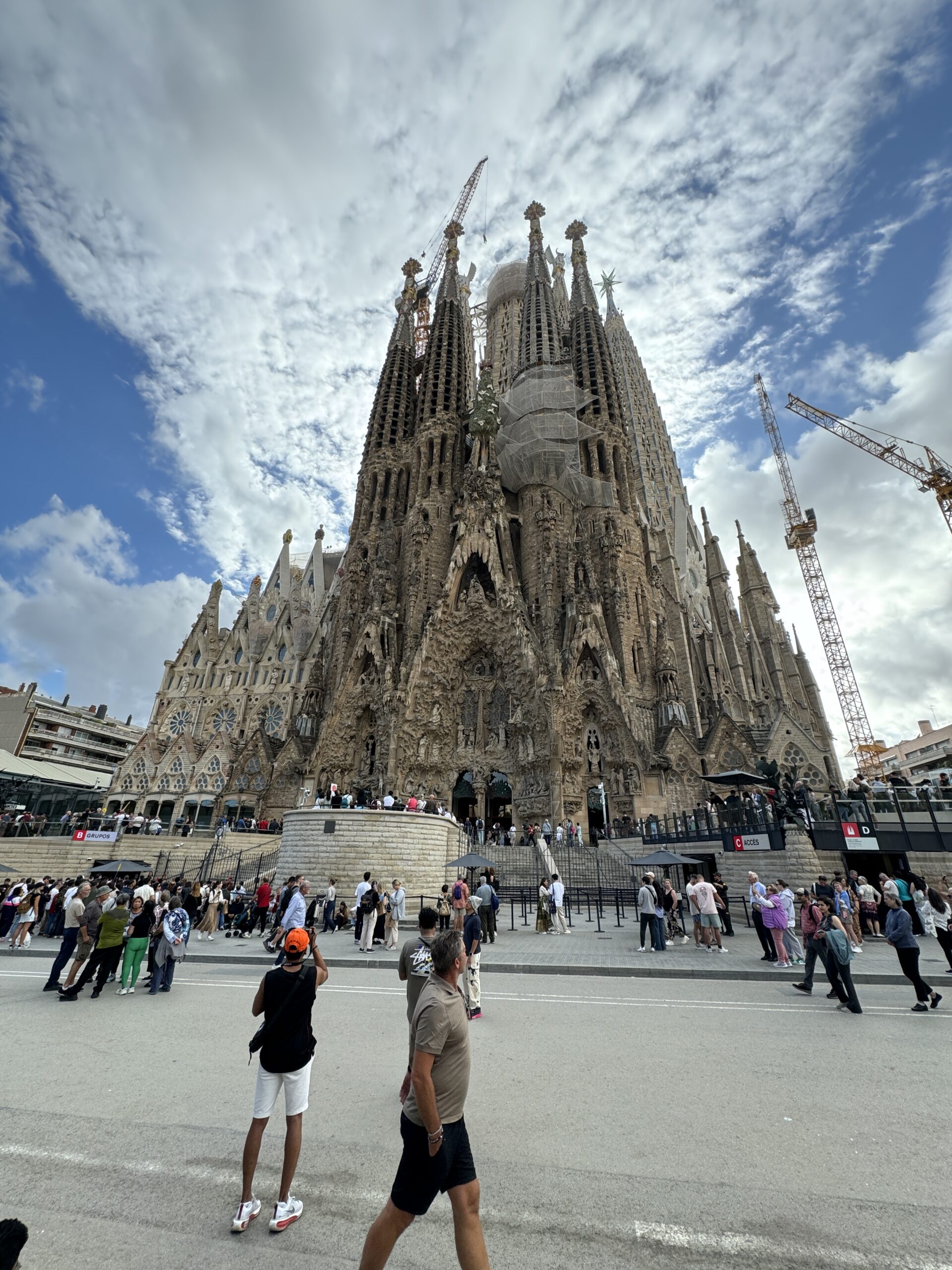
Barcelona is a culturally significant city in Spain and understanding the language there is an important part of understanding the culture of the city, and Spain. For students studying Spanish at University it is often possible to take a module in Catalan or study the history and significance of the language. There are no lack of immersion opportunities; language exchanges and classes are abundant.
Tips for Success
Make the most of your time at language school! Prepare well and complete any study provided between lessons.
To maximise learning, consciously choose to interact in Spanish and, if necessary, politely insist on it by stating you want to practice – “quiero practicar”. The city is definitely feasible for achieving high proficiency in Spanish, as long as you are actively engaging with the community.
Where else can I learn Spanish?
Blue Stamp offers language school packages in Madrid, Valencia, Alicante, Granada, Salamanca, Seville, Malaga, Benalmadena and San Sebastian. Each have their own unique benefits and students have different reasons to visit each. Sometime, for short stays, even looking at convenient flights can be a factor. For longer stays you may want to consider the climate, neighbouring cities, or even multi-city stays!
What other languages are spoken in Spain?
In Valencia, Valenciano, a form of Catalan is spoken although it is less frequently heard in every day conversations. In the North of Spain, Basque is commonly spoken in cities such as San Sebastian, Bilbao and Santander. Again in these cities it is perfectly possible to learn Spanish and the other languages only add interest for a keen linguist. They are not to the detriment of a Spanish student.
If you’d like to learn more about the different languages and regions of Spain, check out our blog post ‘Spain Beyond the Stereotypes: Exploring Its Diverse Regions’. And if you’re interested in learning Spanish in Spain, check out our Spanish courses.