Spain is famous for sunshine, festivals, and great food, but what if you could do more than just taste it? Imagine stepping into a Spanish kitchen, tying on an apron, and learning to cook traditional dishes from scratch. An educational cooking workshop isn’t just about recipes, it’s about culture, teamwork, confidence, and language learning all rolled into one unforgettable experience.
Ever wondered what a Spanish cooking workshop involves?
A cooking workshop in Spain usually begins with a warm welcome from a local chef or food educator. You’ll often start by learning about the history of the dishes you’re about to prepare. For example, you might discover how paella originated in Valencia as a farmer’s meal cooked over an open fire, or why tortilla Española is such a staple in Spanish homes.
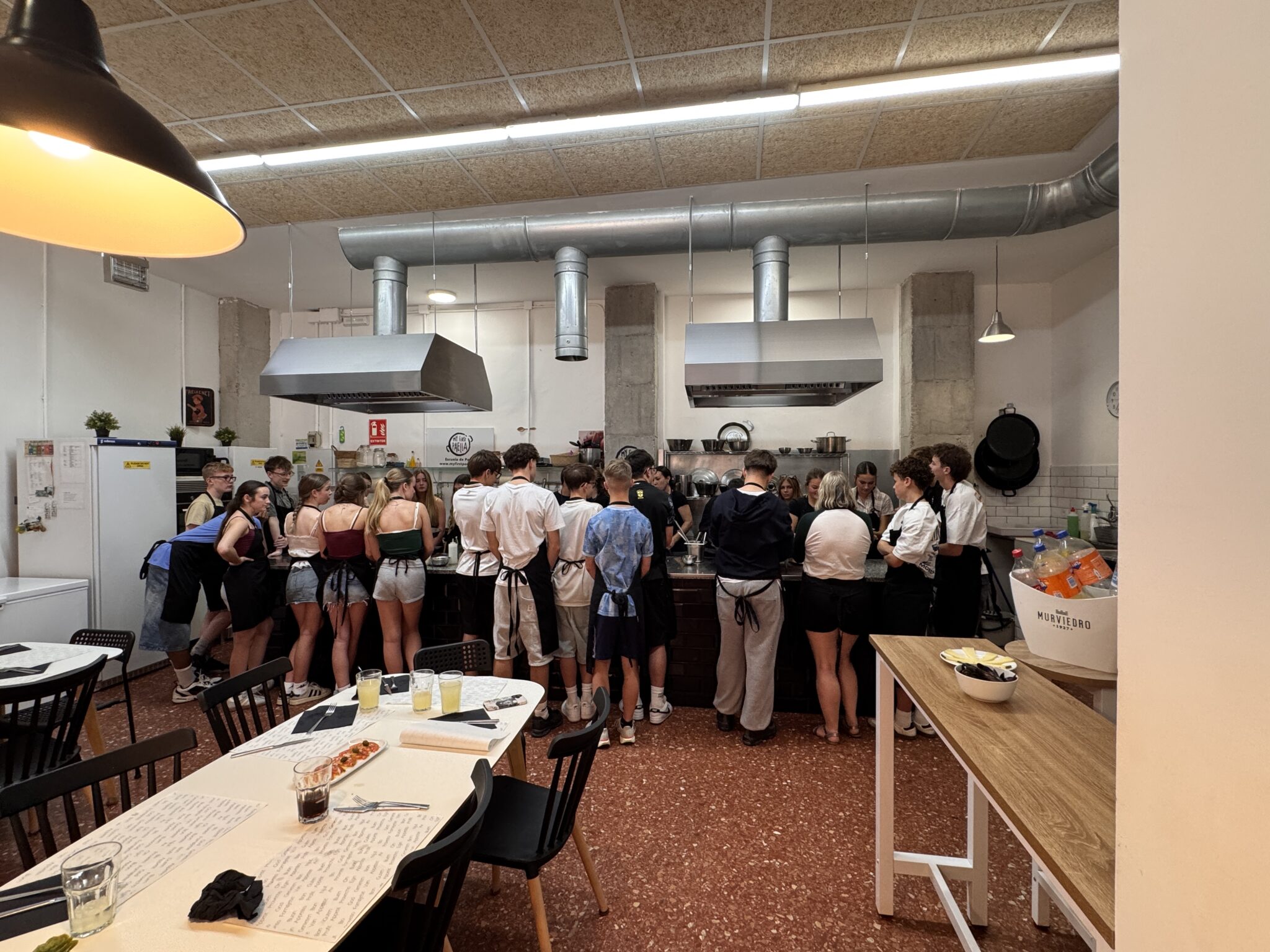
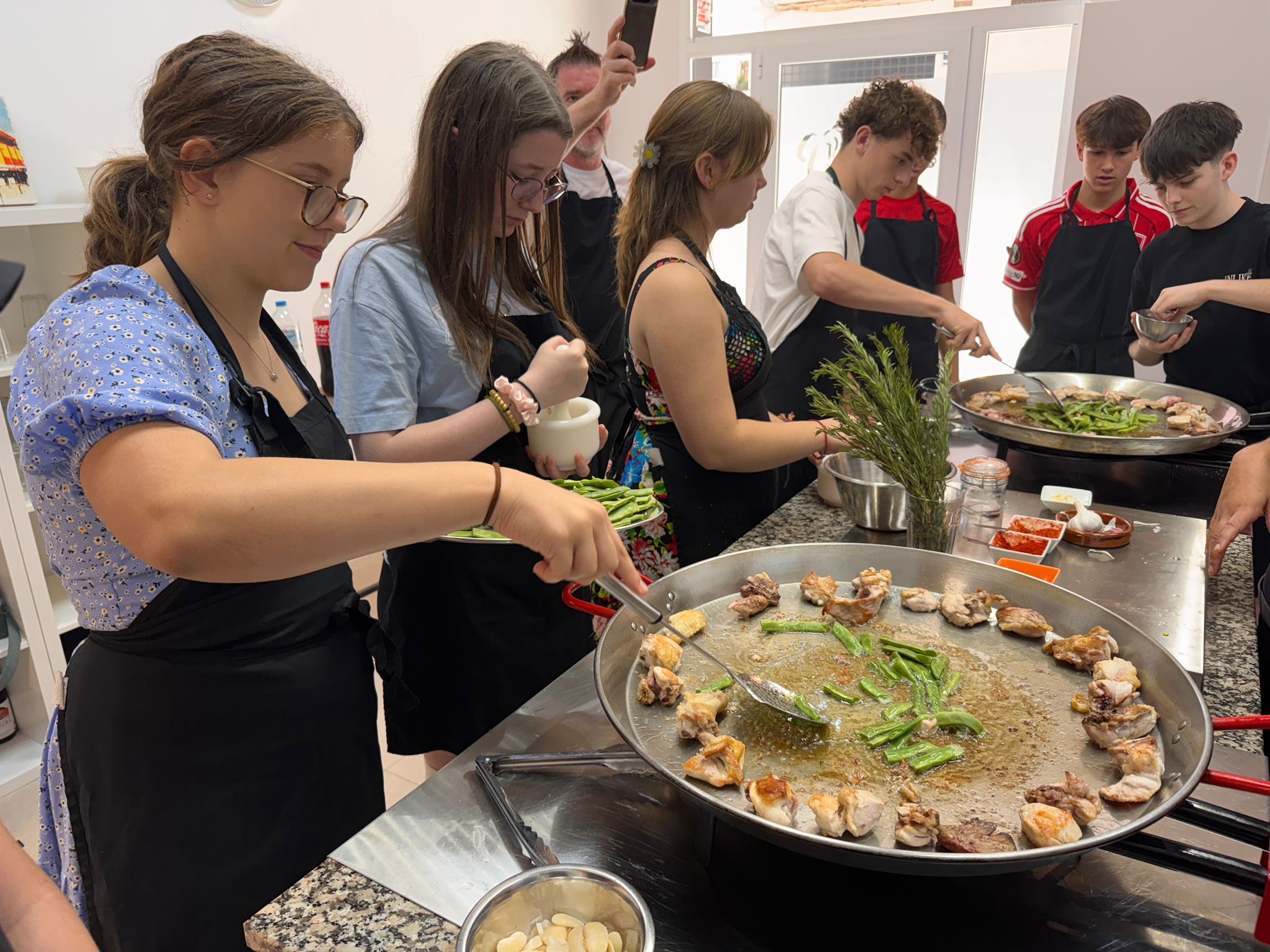
Next comes the hands-on part. Students are divided into small teams and given ingredients, recipes, and guidance. There’s chopping, stirring, seasoning, tasting and lots of laughter along the way. Everyone can feel involved from the more reserved to the naturally outgoing.
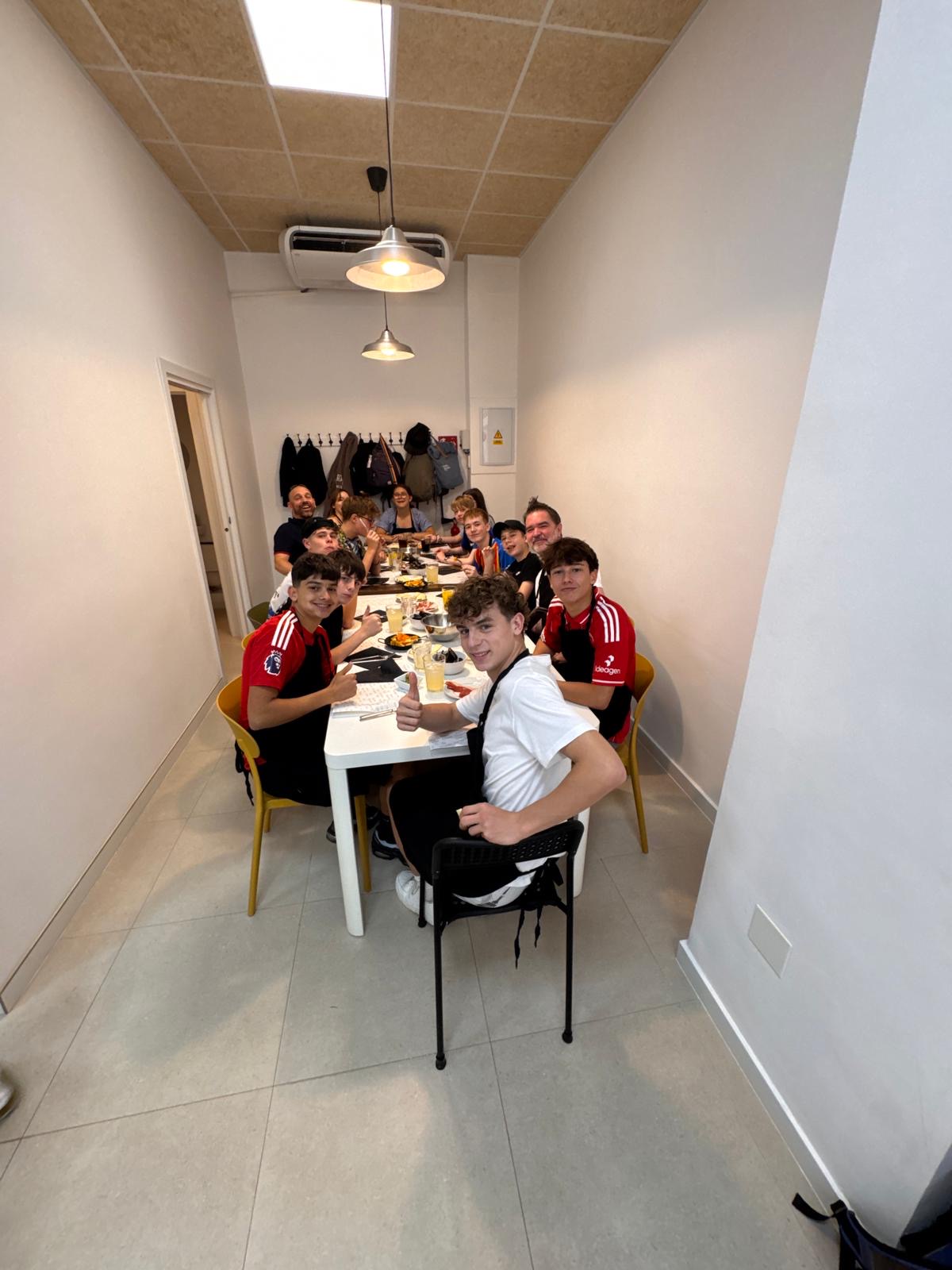
Workshops usually end in the best way possible, sitting down together to enjoy the food you’ve created. Sharing a meal is a big part of Spanish life, and it’s a moment everyone remembers.
How much cooking will I do?
Get ready to get involved because cooking workshops aren’t just demonstrations where you watch a chef at work. Educational workshops are designed to be interactive. Students measure ingredients, prepare vegetables, cook on the stove, and plate up the dishes. You might try making refreshing gazpacho, crispy churros, or seasonal tapas using fresh local produce.
Of course, the level of independence depends on age and experience. Younger students receive more guidance, knives and sharp kitchen implements are only used where appropriate, while older teens might be asked to manage timings, coordinate tasks, and even adapt flavours.
Cooking workshops are an excellent way to build collaboration skills. Students quickly realise that good communication is essential, especially when sharing the same chopping board!
Why is cooking a good way to get to know a different culture?
Food tells a story. In Spain, meals are about more than eating, they’re also about communication and community.
When students cook traditional dishes, they begin to understand regional identity. For example, they might hear about how Valencia is closely linked to paella, or how afternoon merienda snacks are part of everyday life. These details make geography and history feel real.
Cooking also introduces cultural habits: later mealtimes, shared plates, fresh market ingredients, and long conversations around the table. Instead of reading about culture in a textbook, students experience it first-hand.
For teenage learners, this sensory experience is powerful. It creates lasting memories and encourages open-mindedness. For teachers, it’s cross-curricular gold: food connects to language, history, geography, and even science through nutrition and chemistry.
Will it improve my language?
Absolutely, and in ways you might not expect.
Cooking workshops are full of real-life vocabulary. Students practise food names, kitchen equipment, quantities, and instructions. Phrases like ‘¿me puedes pasar la sal, por favor?’ (can you pass me the salt, please?) suddenly have real meaning when you’re mid-recipe.
Because everyone is focused on a shared task, speaking feels natural rather than intimidating. Students often feel less pressure than in a classroom setting. They’re communicating to achieve something practical.
More than just a recipe
For teenage students, it’s exciting, hands-on, and a bit different from a typical lesson. For teachers, it’s meaningful, curriculum-linked, and memorable.
So next time someone asks, ‘What’s cooking?’ you can say: culture, confidence, communication… and maybe a perfect pan of paella too.
For an idea of what a typical paella-making workshop in Spain looks like, check our our blog ‘A Taste of Tradition: Paella-Making in Valencia’, or watch our TikTok video, which walks you through the experience step by step!