
Passport Advice
Information, advice and links to ensure your travel documents are all in order before your trip

Passports and travel documents
For UK citizens, a valid passport is essential if you want to travel to the EU and rest of the world. This page provides important information on what to check before you travel so you can be confident of passing through border control without a hitch. Blue Stamp Travel takes no responsibility for travellers’ passports or other travel documentation. It is the responsibility of each traveller to ensure they have a valid passport for their travel purposes.
The information on this page is aimed at UK travellers visiting the EU or Schengen area. If you are travelling further afield, check the UK Government Foreign Travel Advice page.
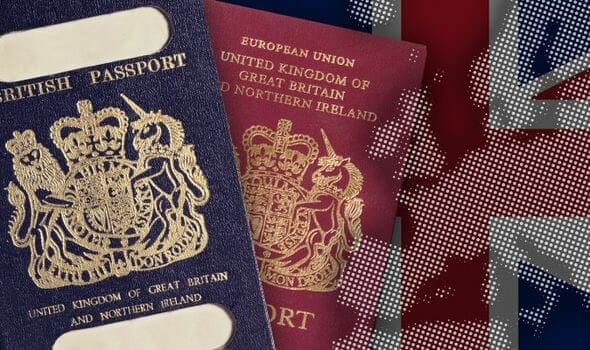
Passport FAQs
Yes. All EU countries require UK citizens to present a passport on arrival. You will need a valid passport to get back into the UK on your return.
Check the date that your passport expires and allow plenty of time for a replacement to be issued before your trip if you need one.
Your passport must have been issued not more than ten years before your departure date.
Your passport must have at least three months’ validity beyond your planned return date. In other words, if you plan to return from a trip on 1 April, your passport must be valid until at least 1 July.
TUI provides a helpful passport validity checker if you are in any doubt that your passport may not be valid for your travel.
If you are travelling to a country outside the EU, check the Foreign, Commonwealth and Development Office website, which includes detailed guidance on entry requirements for every country in the world. (We don’t run trips to Bhutan yet, but who knows, we might do one day!)
According to the UK Passport Office, it takes around three weeks to renew a passport once your documents have been received through their online service. However, this is not a guarantee and we strongly advise applying as early as possible, as it can take significantly longer at peak times.
You can apply at a Post Office for an additional fee of £16.
A fast track service is available for an additional fee, but you will need to travel to a passport for an in-person appointment. The one-day premium service for adult passports only costs £222, while the one-week premium service costs £178 for an adult passport and £145 for a child’s passport. The one-week service includes courier delivery. See the Passport Office advice on fast track passports.
You must return your old passport to the Passport Office when you request a new passport. It is therefore not possible to travel on an old passport while waiting for a new one.
UK citizens must present a passport in order to enter EU countries and enter the UK on their return. Other forms of photographic ID, such as a driving licence, are not valid.
If you lose your passport while travelling abroad, you can apply for an emergency travel document that will allow you to return to the UK.
Go to the UK Government web page on Urgent Travel from Abroad without a UK Passport for full instructions and the application process. You will be charged a fee (currently £125).
We strongly recommend keeping a note of your passport details to speed up the process of requesting an emergency travel document. If you have uploaded your passport to Babel, log in to your account to see all your passport details there.
You will need a biometric passport to register for the EES system on arrival in the EU. Once the system is fully operational, you will no longer need to have your passport stamped on arrival and departure from the EU/Schengen area. Read our full guide to EES, ETIAS and visas to find out more about how the new systems will affect you.
Depending on the nature of your trip, we may ask you to upload to Babel a photo of the photo page from your passport. Passport images are stored securely and in compliance with our GDPR policy. Images of passport pages are used for purposes such as booking and checking in flights, identifying you, or confirming your identity to hotels.
If you hold dual nationality with citizenship of the UK and another country, you must travel on your UK passport to enter the UK. If you do not hold a UK passport, you must apply for a certificate of entitlement which costs £589.
The rules concerning dual citizenship and eligibility for dual citizenship are complex, so we strongly advise consulting UK Government advice on dual citizenship if you are in any doubt about your status.
Absolutely! Every year, many holders of passports from outside the UK travel on courses and trips arranged by Blue Stamp Travel.
We do recommend checking well in advance of your trip to ensure you have got all the documentation you need, not only to exit the UK, but also to get back into the country on your return. The UK Government website contains authoritative information on travel to the UK. The e-Visa page provides comprehensive guidance on how to manage, update and access your e-Visa.
If you are travelling to the EU/Schengen area with Blue Stamp Travel and you hold a passport from a third country, you should check the advice from the embassy of your destination country.
Passport advice for group leaders and teachers
If you’re taking a group outside the UK, the prospect of managing that many different passports can be a daunting one. However, we’re here to help, and if you follow the advice below, you can be confident that your group will have the right documentation to travel smoothly and without a hitch.
Groups – Passport Checklist:
- Remind parents/carers of their responsibilities
- Parents/carers are responsible for ensuring that their child has a valid passport and any other documentation needed for the trip. We recommend starting the conversation as soon as you receive deposits to remind parents/carers to check the validity of their child’s passport, and to apply for a replacement well in advance of departure. The last thing anyone wants is for a child to miss out on a trip because their parent/carer left it too late to apply for a new passport.
- Check in with parents/carers of children who hold non-UK passports
- Brexit and other recent changes to the law have created some potential pitfalls for holders of non-UK passports. However, if parents/carers check in good time, they can get the documentation their child needs without major additional expense. On the other hand, leaving it until the last minute can be very costly and could even prevent someone from travelling.
- Don’t try to become an immigration law specialist
- With so many different potential permutations of nationality, citizenship, residency, visas and so on, it’s a dizzying prospect to work out what any given traveller needs. That’s where you should talk to parents/carers. They understand their own circumstances and what they need in order to travel out of and back into the UK. If they are in any doubt, they should consult the embassy of their home country.
- Encourage students and parents/carers to keep up-to-date with Babel tasks
- Babel takes the stress out of preparing for a trip, but only as long as travellers keep up with their tasks! We recommend giving travellers regular reminders to check in on Babel to make sure they have seen all the information and completed their tasks. We also send emails to chase travellers who have fallen behind: a gentle nudge from a teacher or group leader can often go a long way in encouraging a young person to upload a passport photo or get their parental consent form signed.
- Gather relevant documentation for non-UK passport holders before you travel
- We strongly recommend putting together a dossier of relevant documents for any traveller who does not hold a UK passport to help deal with any questions that may arise when crossing an international border. This can include:
- A letter from your institution’s Head Teacher explaining the purpose of the trip. This should be signed with wet ink and, if possible, stamped with your institution’s official stamp
- Copies of parent/carer passports and other documents such as photocopies of confirmation of residency status
- Paper copies of your Blue Stamp Travel itinerary, group lists and other documentation – you will receive all of this in your final mailing shortly before you travel
- We strongly recommend putting together a dossier of relevant documents for any traveller who does not hold a UK passport to help deal with any questions that may arise when crossing an international border. This can include: