Host Accommodation
Find out all about homestay accommodation for your trip abroad

Host Accommodation
Host accommodation – also known as ‘homestay’ – is a safe, affordable and popular option when staying abroad. Here we explain why homestay accommodation is a great choice, what to expect from your homestay, and how Blue Stamp Travel prioritises safeguarding in host accommodation.
Homestay – the benefits
There are many benefits to homestay accommodation when travelling abroad:
- Host accommodation allows under-18s to travel independently, providing a supportive, safe environment and proper meals.
- Homestay is typically more affordable than hostel or hotel accommodation.
- Hosts generally provide half-board meals, saving travellers the cost of eating out every night or having to shop for self-catering.
- Hosts speak to their guests in the local language, creating an immersive environment for language learning.
- Hosts are local experts and can offer advice on travel, safety and local amenities.
What’s included with homestay accommodation?
Homestay accommodation typically includes a bed in a single bedroom, half-board meals and use of a shared bathroom. Don’t expect 5* hotel luxury – do expect a warm welcome, conversation in the target language and a chance to experience real life in your destination city.
Safeguarding in host accommodation
Blue Stamp Travel is committed to the highest standards of safeguarding in every aspect of every trip we organise. Read our guide to Safeguarding in Homestay Accommodation to find out the ways in which host accommodation enhances traveller safety, and our detailed policy on the recruitment, vetting and management of hosts.
Find out more about host accommodation
Host Accommodation Guide
Read our handy guide to host accommodation, including advice on cultural differences, communication styles, evening meals and much more.
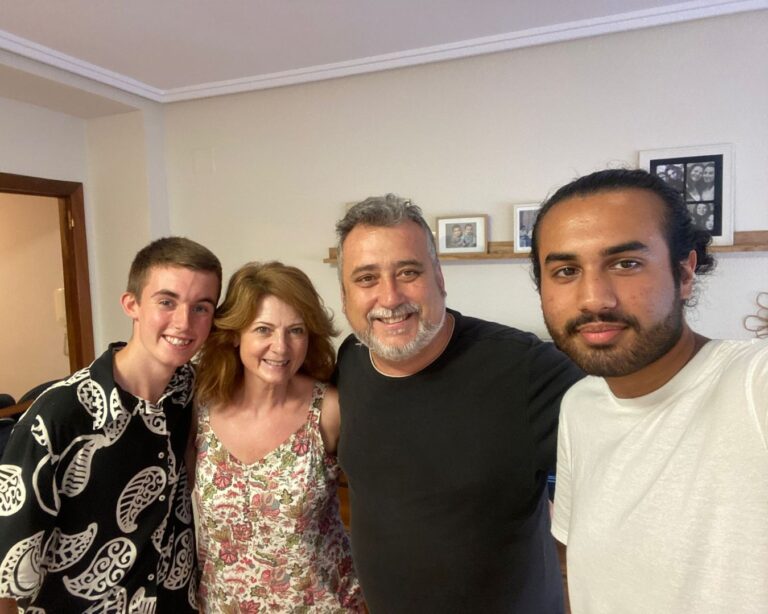
Safeguarding in Host Accommodation
Read our detailed guide to the ways in which host accommodation can promote safeguarding while abroad, along with Blue Stamp Travel’s policies and procedures for ensuring hosts’ suitability to look after children and young people away from home.

Book host accommodation abroad
Book host accommodation for your stay abroad. Ideal for a gap year adventure, study abroad, or just as an affordable alternative to expensive hotels and hostels. From as little as one week to a whole year.
Homestay FAQs
Host accommodation means staying with local people in their home. It allows travellers to immerse themselves in local culture, speak the language with hosts and enjoy a safe, welcoming and friendly environment in a new country.
Unlike exchanges, our hosts look after international students all year round and understand how to support young people staying away from home.
Many people use the term “host family” to describe host accommodation, but we prefer “host accommodation” or “homestay” instead. The reason is that very few of our hosts have children living at home – most are individuals or couples whose children have grown up and flown the nest.
Each host is different. You will be staying with real people in their homes. Some hosts are parents whose older children have left home. Some hosts have children living at home. Very occasionally, fathers whose older children have left home host male students.
If you are staying in a city, your host will likely live in an apartment rather than a house. The rooms may be smaller than those in your home, but keep an open mind and be open to new experiences. After all, travel is all about seeing a different side to life!
We call it host accommodation (or homestay) instead of “host family” to reflect the different types of home situations.
Each host is carefully selected by a specialist accommodation officer. The accommodation officer visits the host accommodation to ensure they can match you with a household that will give you the best possible experience. The officer also monitors feedback from guests and is available to support during your stay.
Gender, age, allergies, dietary requirements and preferences are taken into account. In some cases, there may be a supplement for special requirements.
We aim to share details of your host 2–3 weeks before you travel through your account on Babel.
It is not generally possible to change hosts after you have arrived in country, unless there are exceptional circumstances. If you have any concerns, speak to your language school or contact us on the 24 hr emergency number (shared by email). Most problems can be resolved quickly and amicably, but we are always here to help and support you.
Homestay accommodation is a safe and supportive environment for your trip abroad. All hosts are fully vetted in accordance with local laws and standards. Read our guide to Safeguarding in Homestay Accommodation to find out more.
Expect nutritious but simple cooking – these are homestay hosts, not professional chefs, after all! Staying abroad is a great chance to discover new food, so keep an open mind at meals. It is unlikely that your host will eat traditional food every day.
We will inform your hosts of your allergies and dietary requirements. Please remind them or contact us if the food does not match your requirements.
Allergies and dietary requirements and preferences are taken into account when matching a guest to a host. In some cases, there may be a supplement for special requirements.
If you are travelling independently, your accommodation will generally be in a single room. Please be aware that single rooms may not be available at peak periods. We will always consult with you before confirming a booking and you will be paired with someone of the same gender and similar age.
In general, summer camp accommodation will be in twin rooms with someone of a different nationality to you but same gender and similar age.
Travellers aged under 18 will be expected to respect their host’s curfew times. Older travellers are reminded to respect their hosts by coming and going at reasonable hours.
Hosts may have other students staying with them as well. You may or may not have a private bathroom. Sometimes students share a bathroom with other students and sometimes students share with the host.
Very occasionally, a host may still have children living at home. All adults living at the accommodation will be vetted as part of the host recruitment process, and we will inform you who lives at the property.
Most hosts do not have air conditioning, even in hot countries. Make sure to close shutters/curtains during the heat of the day to maintain a comfortable temperature in your room. See our Guide to Hot Weather in your Babel account for further information. Ask your host for tips on how to keep cool.