
Compare Language Courses for Solo Travellers
Understand the solo language courses offered by Blue Stamp Travel

Choose the right language course
At Blue Stamp Travel, we offer five types of language courses, each suited to different learners with their personal priorities and goals. In this short article, we explain what the key features are so you can choose the right course for you. You’ll find out when the courses are available, who they are aimed at, how long the courses last, and more.
Study French, German, Italian or Spanish with Blue Stamp Travel
We offer five different course formats, each tailored to different learners and their language learning goals:
- Intensive Language courses offer focused, engaging lessons at language school to boost confidence and fluency in speaking, listening, reading and writing. Suitable for all ages and ability levels, from beginners to advanced linguists.
- A-level Revision courses are individually tailored to give students the skills, subject knowledge and confidence they need for exam success. The courses combine intensive class tuition with individual and/or small-group sessions dedicated to elements of the syllabus.
- Work and Study combines an intensive language course with work placements for students aged 16+. Students take their language skills out of the classroom and into the real world, promoting adaptability, fluency and independence.
- Work Experience Abroad packages are a unique opportunity to live and work in a foreign country for a week alongside students from schools across the UK, led by a Blue Stamp Travel group leader. Through work placements with trusted local partners, students use language authentically to gain independence and invaluable professional skills.
- Summer Camps are all about learning languages in amazing locations, making friends and having fun. Teenagers and young adults enjoy lively and dynamic language lessons, take part in exciting activities, and make friends from around the world.
Use the Course Filter at the bottom of the page to select the perfect language course for you.
COMPARE COURSES
Looking for a quick overview of each course type? Here’s our helpful summary of what’s involved, who you’ll meet and what you’ll do.
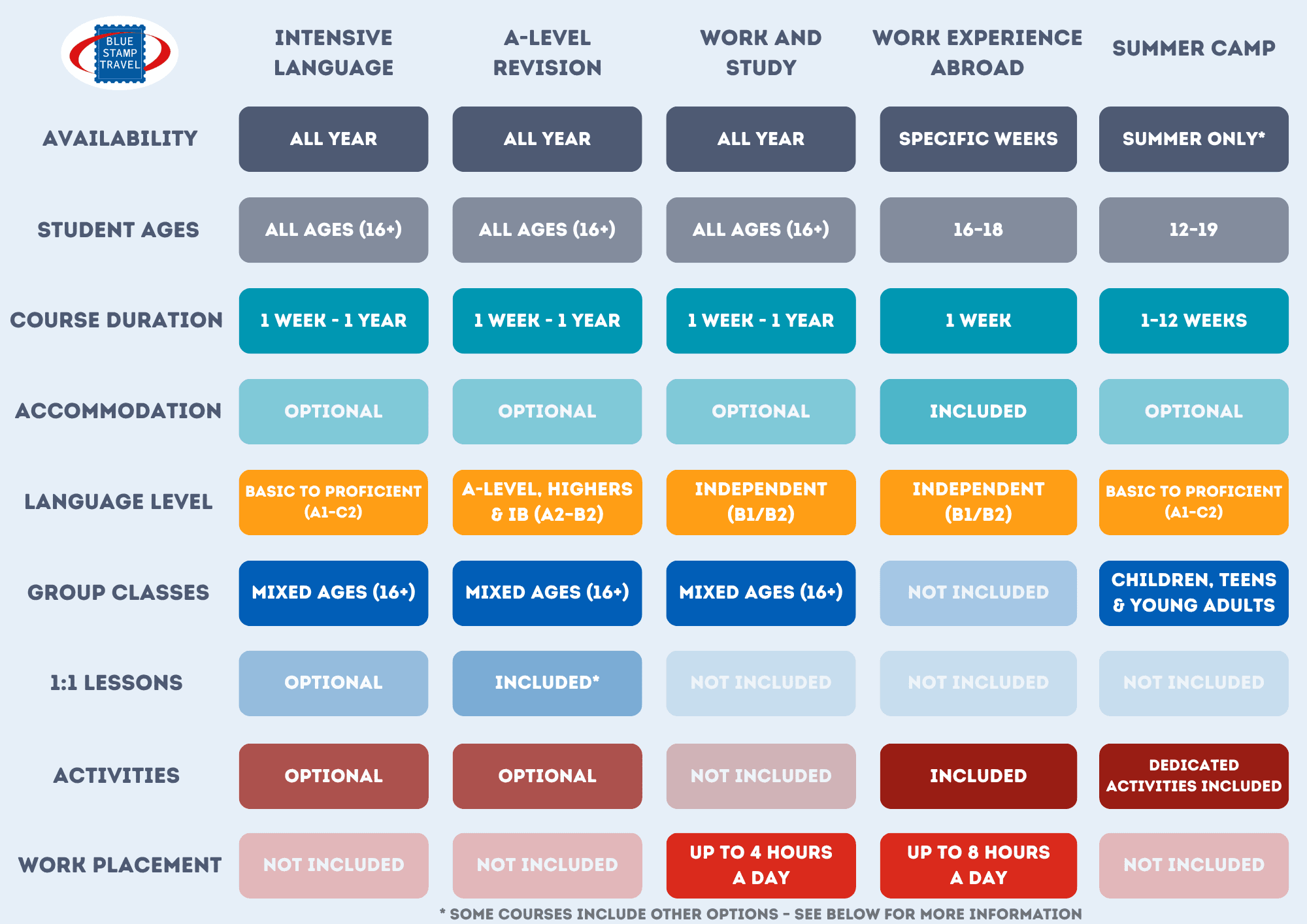 Scroll for a more detailed explanation of each aspect, or see an accessible version of this image. If you have any questions, get in touch – we’re always happy to help!
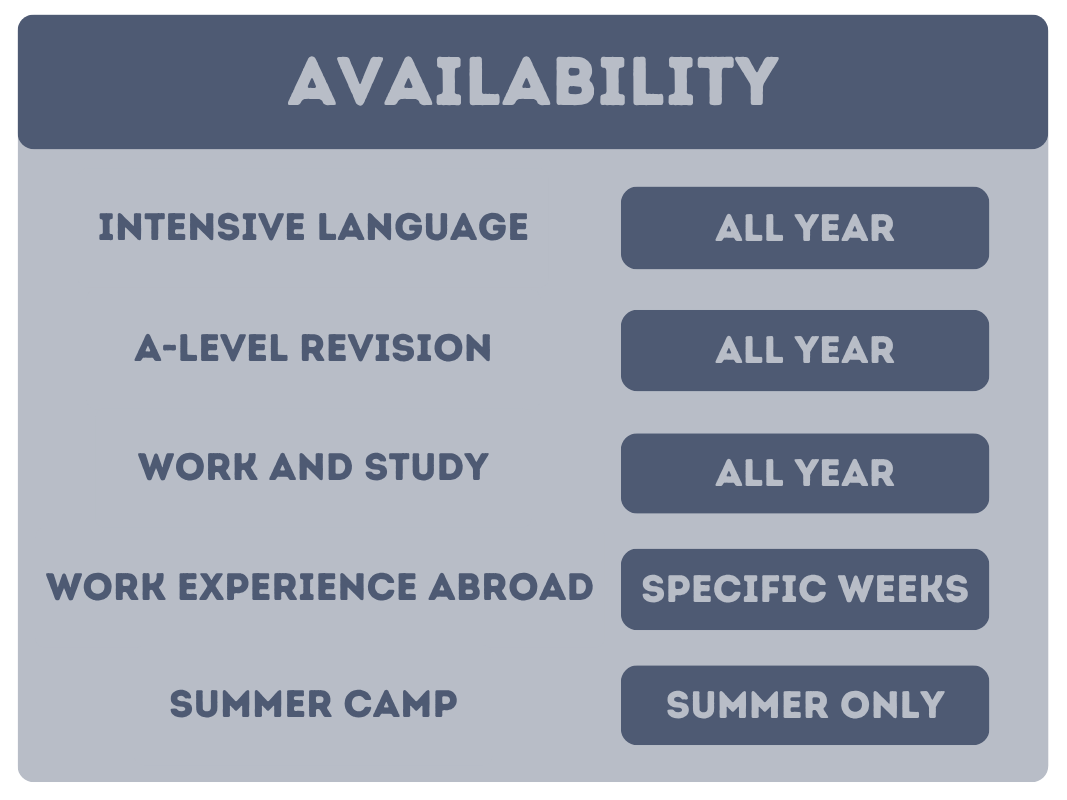
Language Course Availability
Some language courses run all year round, while others are available for specific weeks only. As the name suggests, Summer Camps are take place in the summer months, typically from early July to mid-late August. To check availability for your chosen Summer Camp, hit the red Plan Your Trip button at the top of the course page.
Intensive Language courses are available all year-round (except Christmas), as are A-level Revision courses (except for Nice and Rouen).
If you’re interested in work experience, most Work and Study courses are available all year round. We recommend booking at least ten weeks in advance, especially if you are planning on travelling during school holidays, when competition for work placements increases. Our Work Experience Abroad packages run twice-yearly.
* Benalmadena and Biarritz also offer spring camps. See course pages for full details.
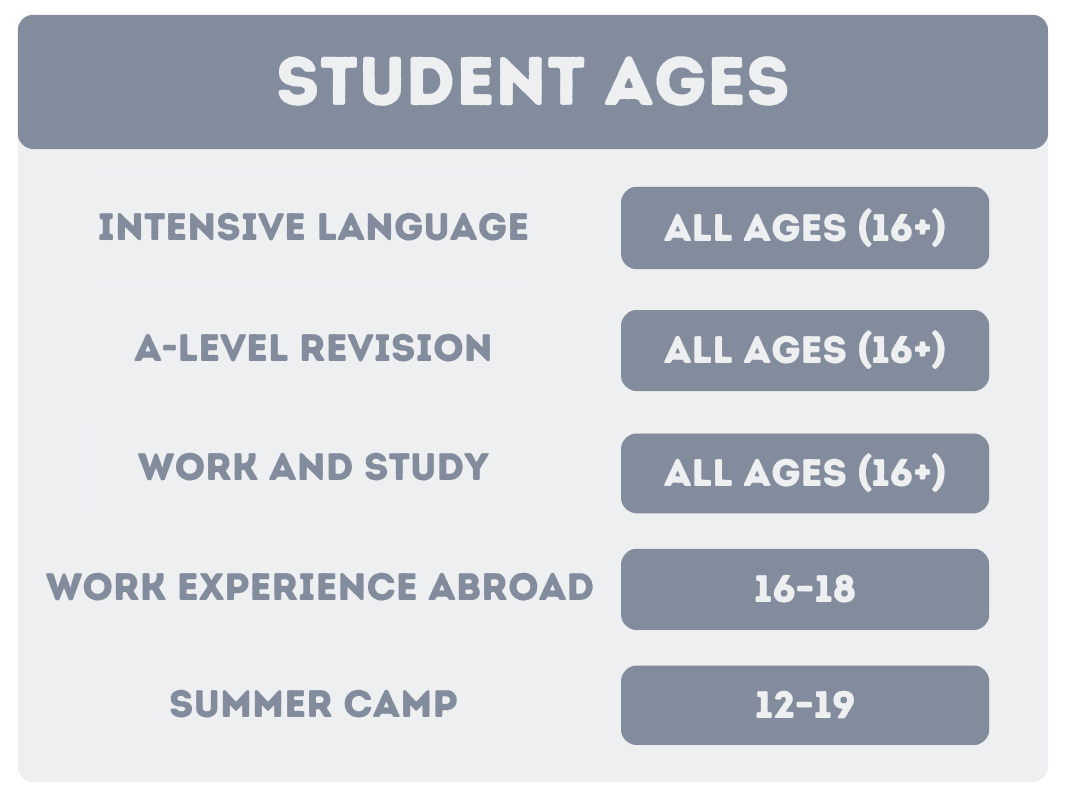
Student Ages
Our friendly language school partners across Europe and around the world welcome students aged 16+ onto their Intensive Language, A-level Revision, and Work and Study courses. There’s no upper age-limit: as long as you want to learn the language, it’s always a great time to brush up your language skills.
Summer Camps cater for specific age groups, such as 13–15 or 15–17. Some camps accept students who have not yet reached the minimum age but will reach that age during the same year. If this applies you, get in touch before you book and we’ll make the necessary arrangements.
Our Work Experience Abroad trips are for travellers aged 16 to 18 only.
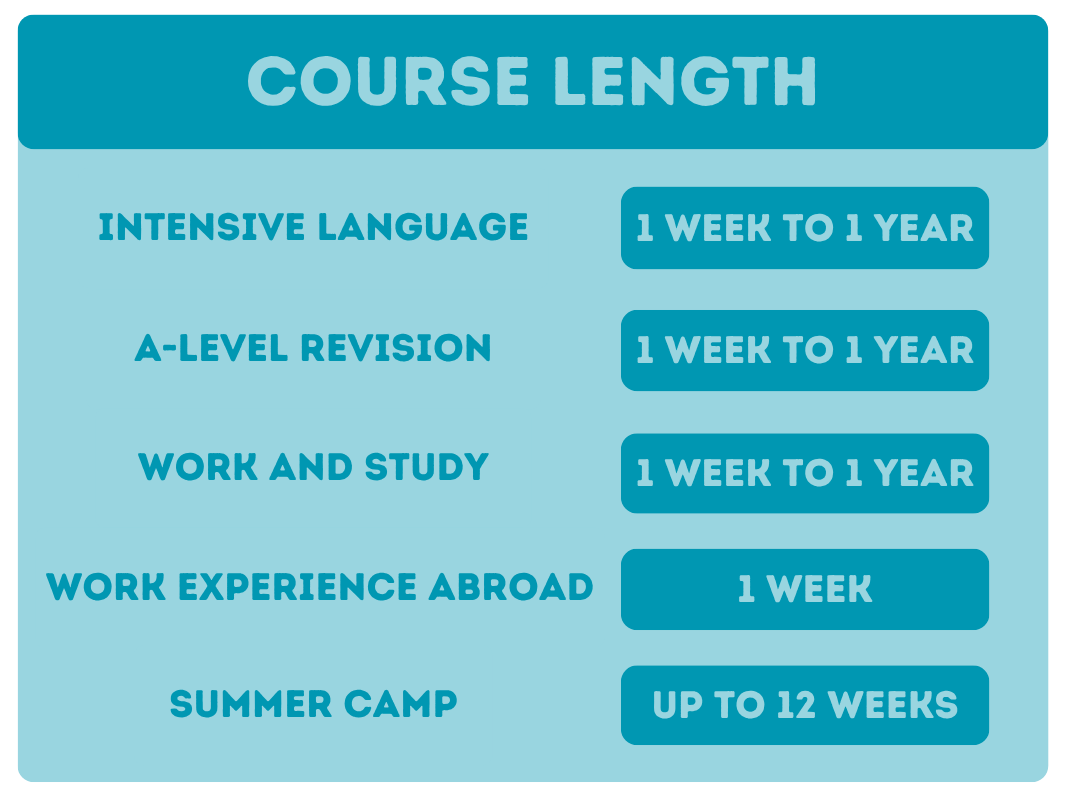
Course Length
For Intensive Language, A-level Revision and Work and Study courses, students can enrol from just one week. However, if you really want to make the most of studying your foreign language abroad, we recommend a course of at least two weeks’ duration. Many students take courses lasting three to four weeks – some even stay for months or even a year!
To book a course of up to four weeks in length, just hit Plan Your Trip at the top of your chosen course page. For longer stays, get in touch and we will arrange everything for you.
If you’re planning a longer stay, make sure to check the visa requirements. UK nationals are allowed to remain in the EU/Schengen area for up to 90 days in a 180-day period without a visa.
Summer Camps and Work Experience Abroad run for limited periods only.
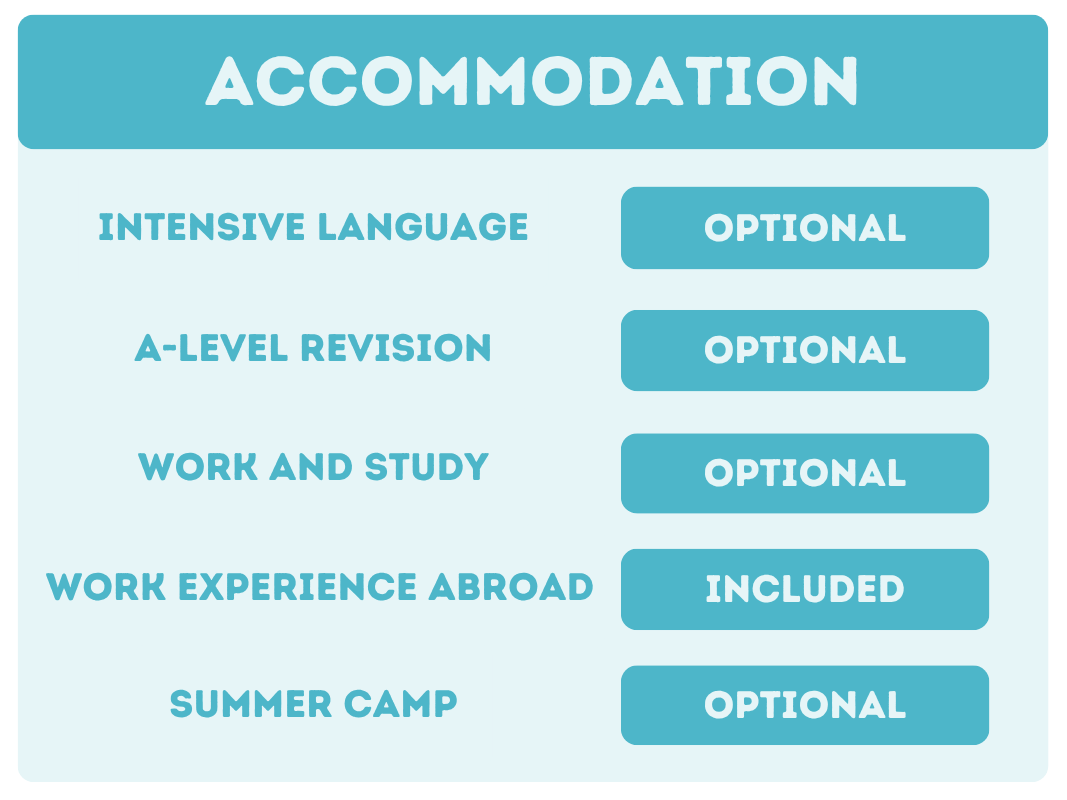
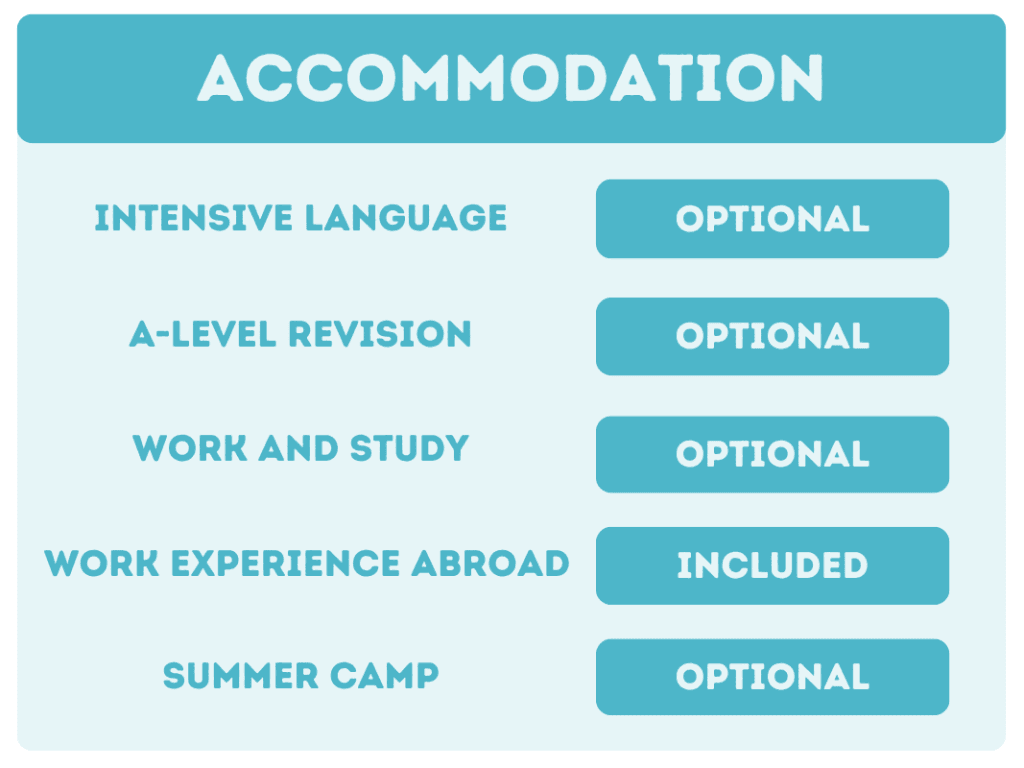
Accommodation
Accommodation is offered as an optional supplement on all our courses except for Work Experience Abroad, where it is included in the package.
When you click or tap Plan Your Trip, you will be given the option to request accommodation. Homestay accommodation is available as standard for almost all courses, while some language schools and Summer Camps offer residences or shared apartments.
Not all accommodation types are open to all travellers: check the information at the top of the course page to see if any age restrictions apply.
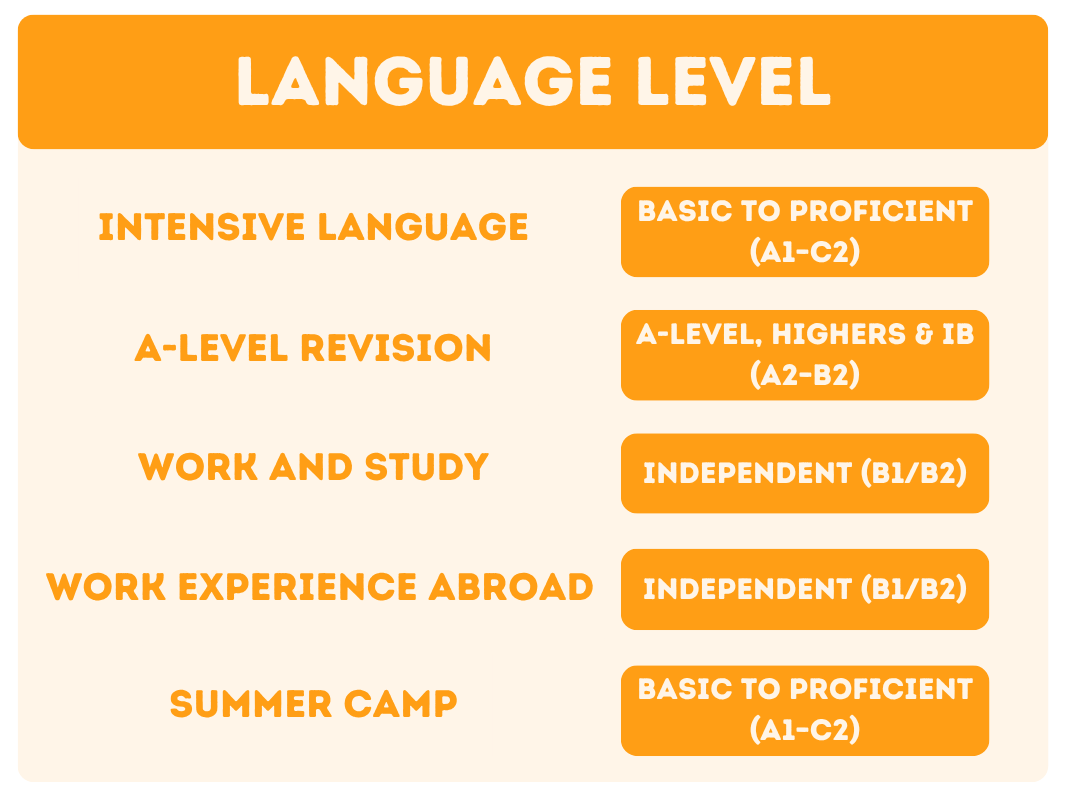
Recommended Language Level
Intensive Language courses cater for students of all levels of language proficiency, from complete beginners to individuals with very advanced language skills. Before you travel, you will be given a short assessment to gauge your proficiency according to the Common European Framework (CEFR). This will be used to allocate you to a class working at the right level. Grouping classes by proficiency allows teachers to tailor course content precisely and help students build skills, confidence and fluency quickly.
Work and Study and Work Experience Abroad packages both require that students should be capable of interacting independently with locals in the target language at B1 level or above. If you aren’t sure of your language level, the following tests are provided by independent national language learning organisations:
A-level Revision courses are open to learners of all levels, but will be of most benefit to students in upper secondary school preparing for A-level, Scottish Highers, IB or other similar examinations, levels A2–B1.
Summer Camps cater for students from basic levels (A1) to above A-level standard (C1). Some Summer Camps welcome complete beginners – check the course details or contact us if you have any questions.
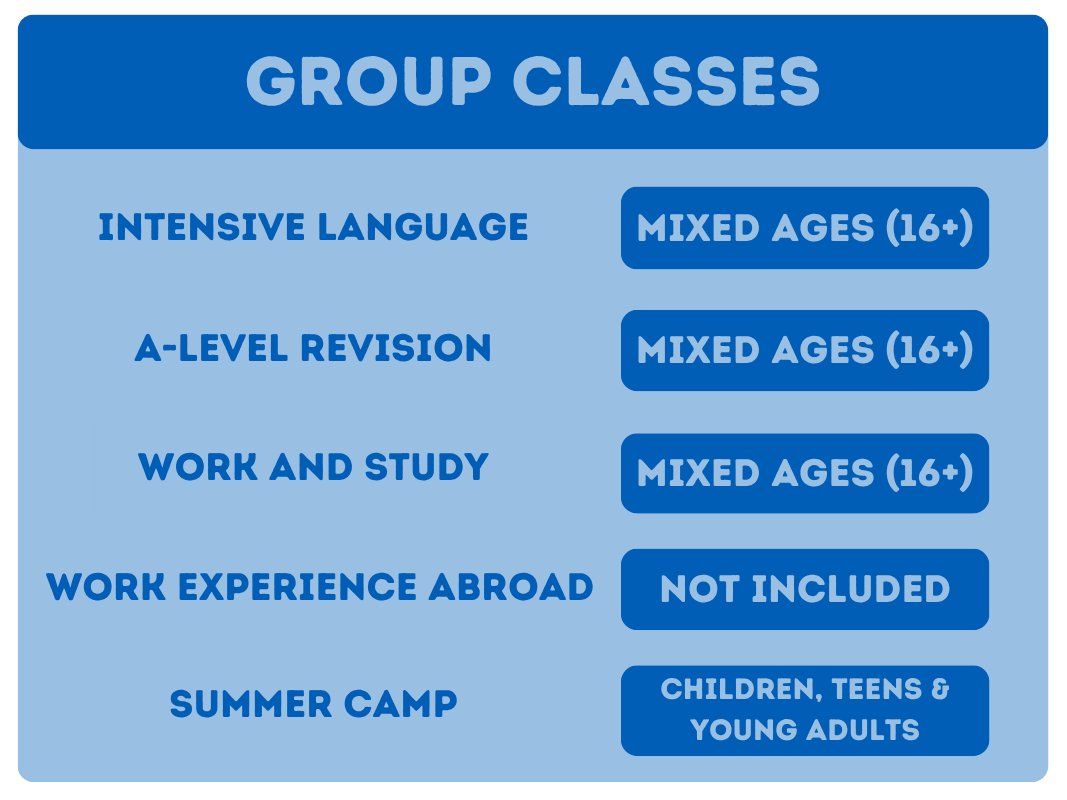
Group Classes
Students on Intensive Language, A-level Revision and Work and Study courses take part in mixed-age group lessons at the level appropriate to their CEFR language proficiency. The teaching and course content are tightly focused on the skills, vocabulary and competencies students require to progress towards higher levels.
Mixed-age groups comprise students of all ages from all over the world. In your class you may be learning alongside a gap-year student from Germany or a pensioner from Paraguay. It’s an exciting, genuinely international experience and an opportunity to meet and engage with other cultures, backgrounds and perspectives.
Students at Summer Camps are grouped by language proficiency.
Individual Lessons
Individual lessons are opportunities for in-depth study of particular topics or skills, or for extended conversation lessons. A-level Revision courses come with individual lessons as standard*. They can be added as optional extras to Intensive Language courses. Generally it is not possible to add individual lessons to other types of course, as the tutorials would conflict with other activities such as work placements.
*A-level Revision courses in Nice and Rouen replace individual lessons with small-group curriculum-focused activities.
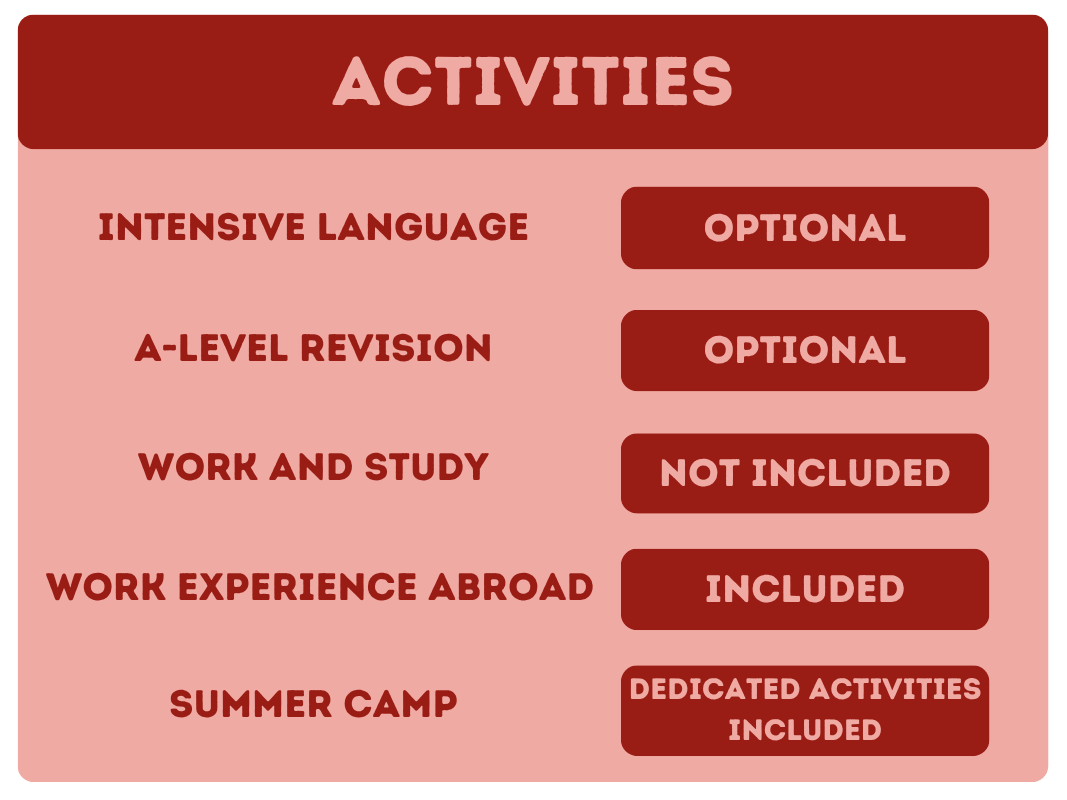
Cultural Activities
Many language schools arrange busy programmes of cultural activities to introduce students to each other and the beautiful cities where they are studying. A typical week may include free activities such as walking tours, photo competitions and social evenings, along with activities in the €5–10 range, and some more expensive activities such as meals out or cookery lessons. Schools sometimes arrange full-day excursions for students staying over the weekend.
Language schools in some destinations do not run formal activity programmes, but they are always happy to offer advice and insider tips on fun and exciting things to do. They can also put you in touch with other students who may be interested in an activity or excursion.
Intensive Language and A-level Revision courses both offer plenty of time to join in cultural activity programmes. Summer Camps have their own dedicated programmes of activities.
For Work and Study trips it is not generally possible to join in cultural activities as the activities clash with work placements.
Work Experience Abroad trips include evening activities arranged by the Group Leader.
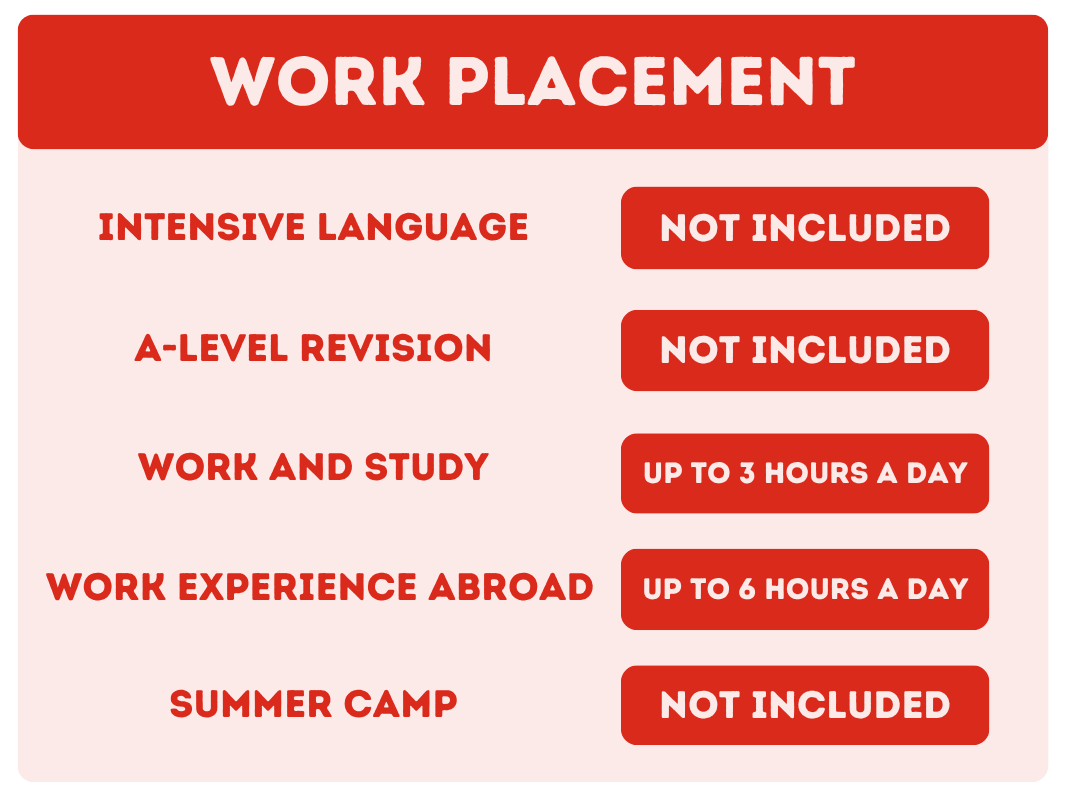
Work Placement
Half-day work placements are included in Work and Study courses. In most cases, the placements are scheduled for the afternoon, although in Spain they may take place in the early evening as businesses close during the heat of the afternoon.
Work Experience Abroad trips include full-day work placements as standard.