
Valencian: language, culture and usefulness for travellers
The Valencian Community is an autonomous community located in the southeast of Spain. It is made up of three provinces: Alicante, Valencia and Castellón. It is one of the most populated communities in the country, and its capital, Valencia, is one of the largest and most important cities in Spain.
Spoken in around 75% of the Valencian territory and, to a lesser extent, in areas such as El Carche, in the Region of Murcia, Valencian, or valenciano, is a Romance language and is also an official language alongside Castilian Spanish.
Origin and history of Valencian
Valencian, like other Romance languages, comes from Vulgar Latin, which was spoken in the Iberian Peninsula during the Roman Empire. Over time, this Latin evolved differently in each region, leading to the development of various Romance languages.
Valencian belongs to the same linguistic system as Catalan and shares a common origin with it. Today, Valencian is generally considered the variety of Catalan spoken in the Valencian Community, although it has its own recognised standards and a strong regional identity.
Throughout history, Valencian has also been influenced by Castilian Spanish due to long-term contact between the two languages, which has contributed to some distinctive features in pronunciation and vocabulary.
Valencian today
It is estimated that around 2 million people can speak Valencian, while many more understand it. Its use varies depending on location, age and context.
Valencian tends to be used more frequently in smaller towns and rural areas, while in large cities like Valencia and Alicante, Spanish is more dominant in everyday interactions, especially in tourist areas. However, Valencian remains widely present in education, local media, public signage and cultural life.
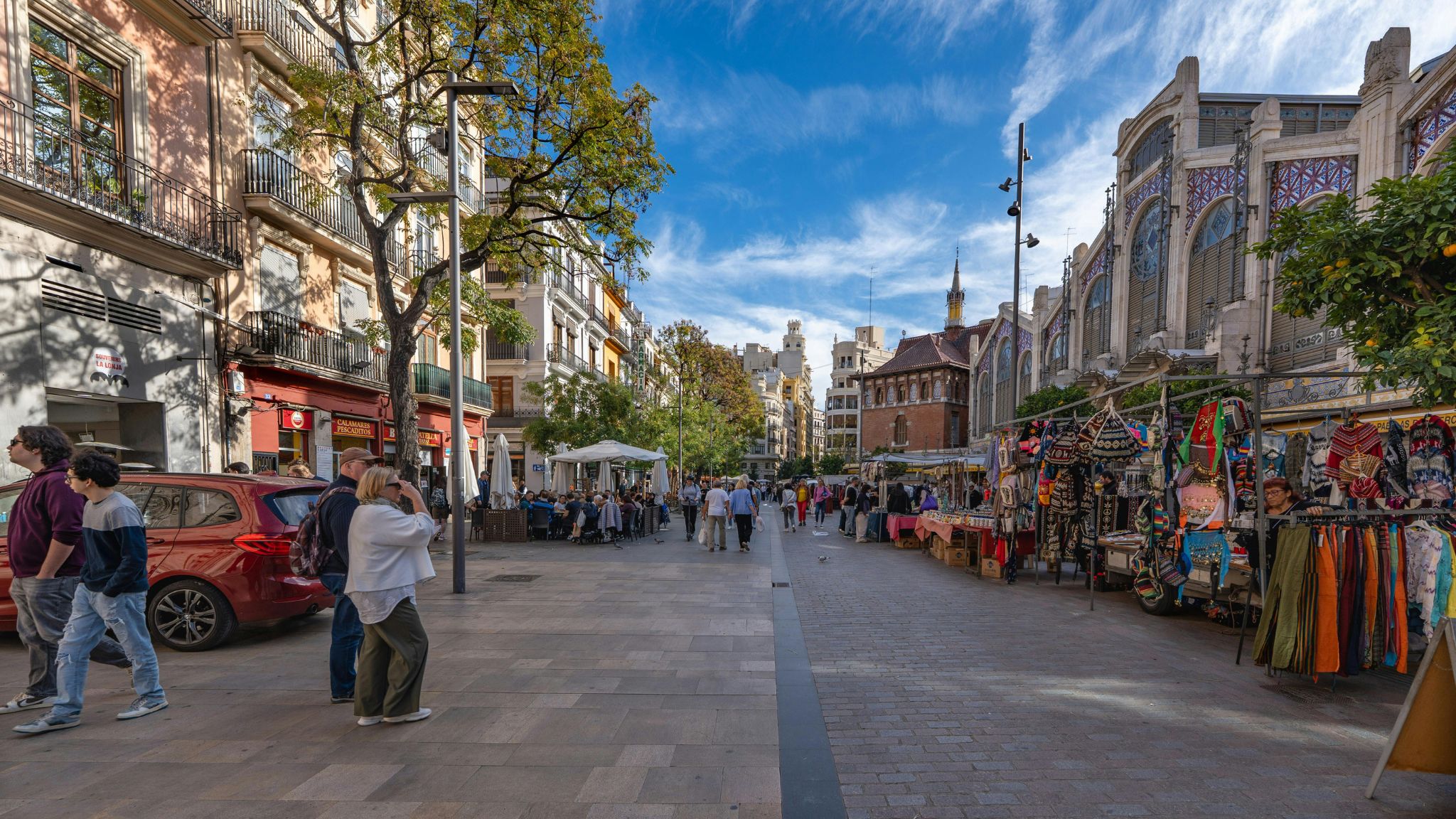
Is Valencian useful for travellers?
It is not necessary to speak Valencian when visiting the region, as Spanish is understood and used everywhere. However, learning a few basic words or phrases can enhance your experience and is often appreciated by locals, especially outside major tourist centres.
Useful phrases for travelling
- Here are some basic expressions that may come in handy:
- Bon dia – Good morning
- Bona vesprada – Good afternoon
- Bona nit – Good night
- Adéu – Bye
- Fins demà – See you tomorrow
- Com estàs? – How are you? / Bé, i tu? – Good, and you?
- Tot bé, gràcies – Everything fine, thanks
- Gràcies or moltes gràcies – Thank you or thank you very much
- De res – You’re welcome
- Per favor – Please
- Pots ajudar-me? – Can you help me?
- Estic perdut – I’m lost
Valencian, Catalan and Castilian Spanish
Many people believe that Valencian and Catalan are exactly the same language but this is not true. Valencian and Catalan share the same grammatical base and are mutually intelligible, meaning speakers can generally understand each other without difficulty. The main differences lie in pronunciation, vocabulary and certain expressions.
For example:
- xiquet (Valencian) / nen (Catalan) – Boy
- eixir (Valencian) / sortir (Catalan) – To go out
Valencian pronunciation often features more open vowel sounds compared to central Catalan, giving it a slightly different rhythm.
Compared to Spanish, Valencian differs significantly in grammar, vocabulary and pronunciation, although there are some similarities due to their shared Latin origin and long contact:
- hui (Valencian) / avui (Catalan) / hui (Castilian Spanish) – today
- espill (Valencian) / mirall (Catalan) / espejo (Castilian Spanish) – mirror
These examples show that Valencian sometimes shares vocabulary with Castilian Spanish, while in other cases it is closer to Catalan. This highlights how Valencian sits between both languages, combining features from each while still maintaining its own identity.
Conclusion
Valencian is a language with strong cultural and historical importance in the Valencian Community. While it is not essential for travel, having some awareness of it and learning a few phrases can make your visit more meaningful and help you connect with the local culture!
If you’d like to hear Valencian in action or practise your own skills, why not book a study or work experience trip to Valencia? Embrace both Spanish and Valencian to deepen your cultural understanding and take your language skills to the next level!